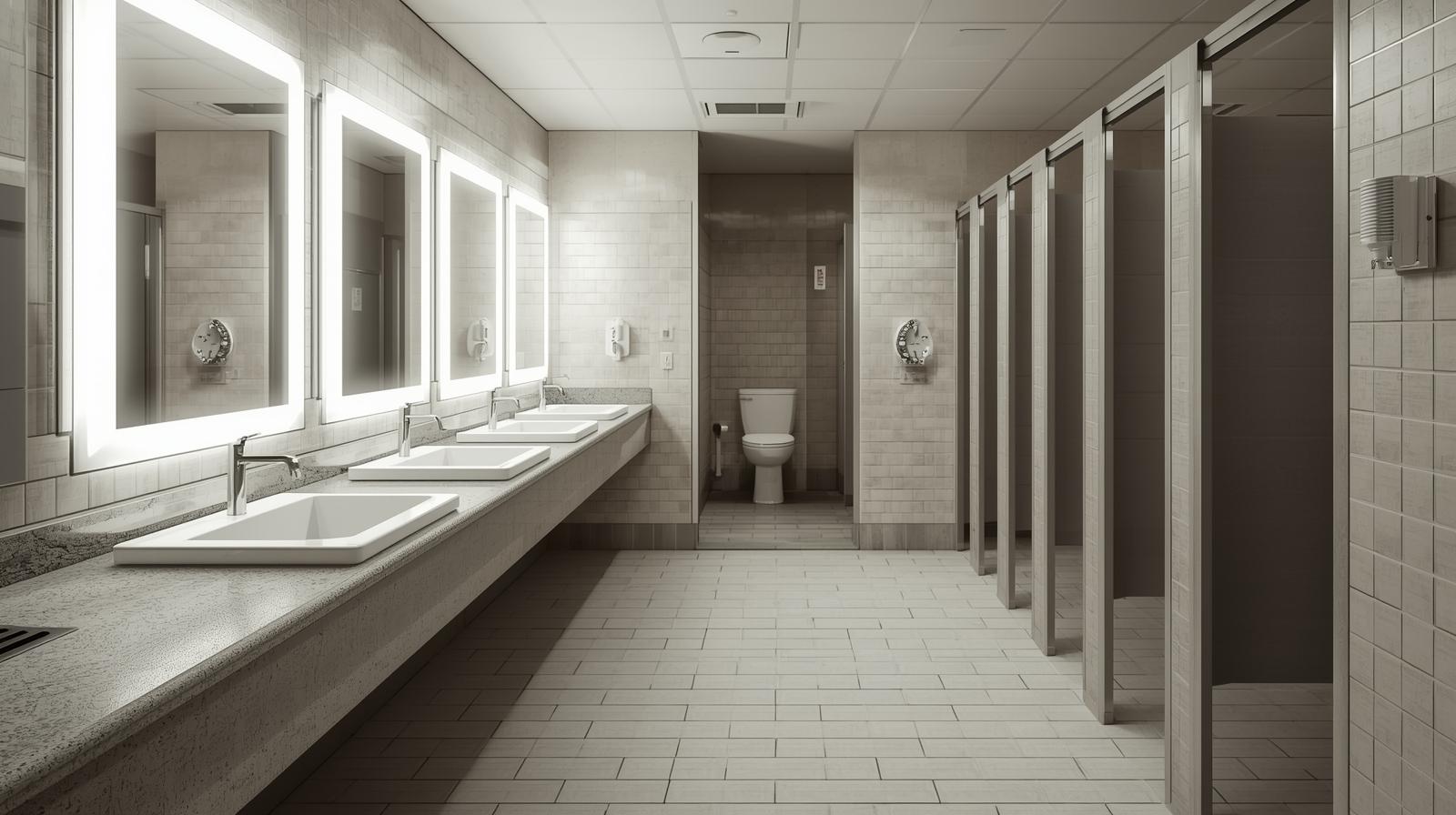
A toilet that keeps failing in Store 14 and a matching flushometer problem in Store 21 are often the same parts story. Treating each as a one-off ticket hides the pattern, multiplies shutdowns, and leaves the next site with the same surprise. Group restroom repairs by failure, then schedule the group.
At Garrett Mechanical, restroom fixture work sits under commercial plumbing and drain and fixture repair. Isolated leaks still belong on leak detection and repair. The grouping conversation is about how those tickets are organized across a portfolio.
Name the failure, not the room number
Write the failed part, the symptom, the age of the fixture family, and how many sites share that family. A fill valve wear-out across one brand of tank is different from a drain line that backs up in every first-floor restroom after lunch. Those two patterns should never share one vague work order titled restroom issues.
Fixture-level shutoffs keep one repair from taking a whole restroom offline. That map is in a commercial plumbing shutoff map. If the site cannot isolate a stall, grouping repairs also means grouping shutdown windows so you are not closing the room four times in a month.
Pull work orders before you buy parts site by site
Look at the last three events on the same fixture type. Temporary resets that were never converted to a permanent fix belong on the list. Parts that are on backorder at one store should change the sequence at the next store, not create a second surprise.
National brand and regional multi-site accounts need the same part names in every ticket. If one manager writes Sloan and another writes flush valve, the pattern disappears in the spreadsheet. Asset naming for HVAC is the same discipline: multi-site preventive maintenance needs the same asset names.
Domestic water load and drain load are different groups
A restroom that fails on cooling days because condensate and domestic water share a bad drain is not a flushometer problem. Keep drain patterns on their own group. Related notes are in commercial restroom drain patterns and domestic water load on full cooling days.
Leak response still needs a named first shutoff. Do not wait until a grouped fixture project to invent that step. See a leak response plan should name the first shutoff.
Schedule the group around hours and access
Retail hours, school calendars, and after-hours access decide whether you can do five flushometers in one night or need three visits. Put operating hours next to the parts list. Multi-trade needs, from carriers to ceiling access, can route through multi-trade coordination.
Closeout should update the asset row: part replaced, photos, and whether sister sites still wait. Documentation expectations are in facility service documentation and closeout. Coverage is on the coverage map.
How we help facilities group the work
We can help normalize fixture names, pull repeat failures, and turn a pile of restroom tickets into a sequenced parts and labor plan. Facilities vendor management partners need that file to look the same in every state we cover.
Contact us at (904) 822-3339 or hello@garrett-mechanical.com, or submit a service request. Bring the last month of restroom tickets, even if the names do not match yet. A messy shared list beats twenty complete stories that cannot be compared.