Field Work Recap
Real commercial work from our technicians, written from completed assessments, quote planning, and customer feedback.
These updates come from recent commercial service activity. We keep the details grounded in what the field team documented: equipment conditions, quote scope, site access, and how facility teams responded to the work.
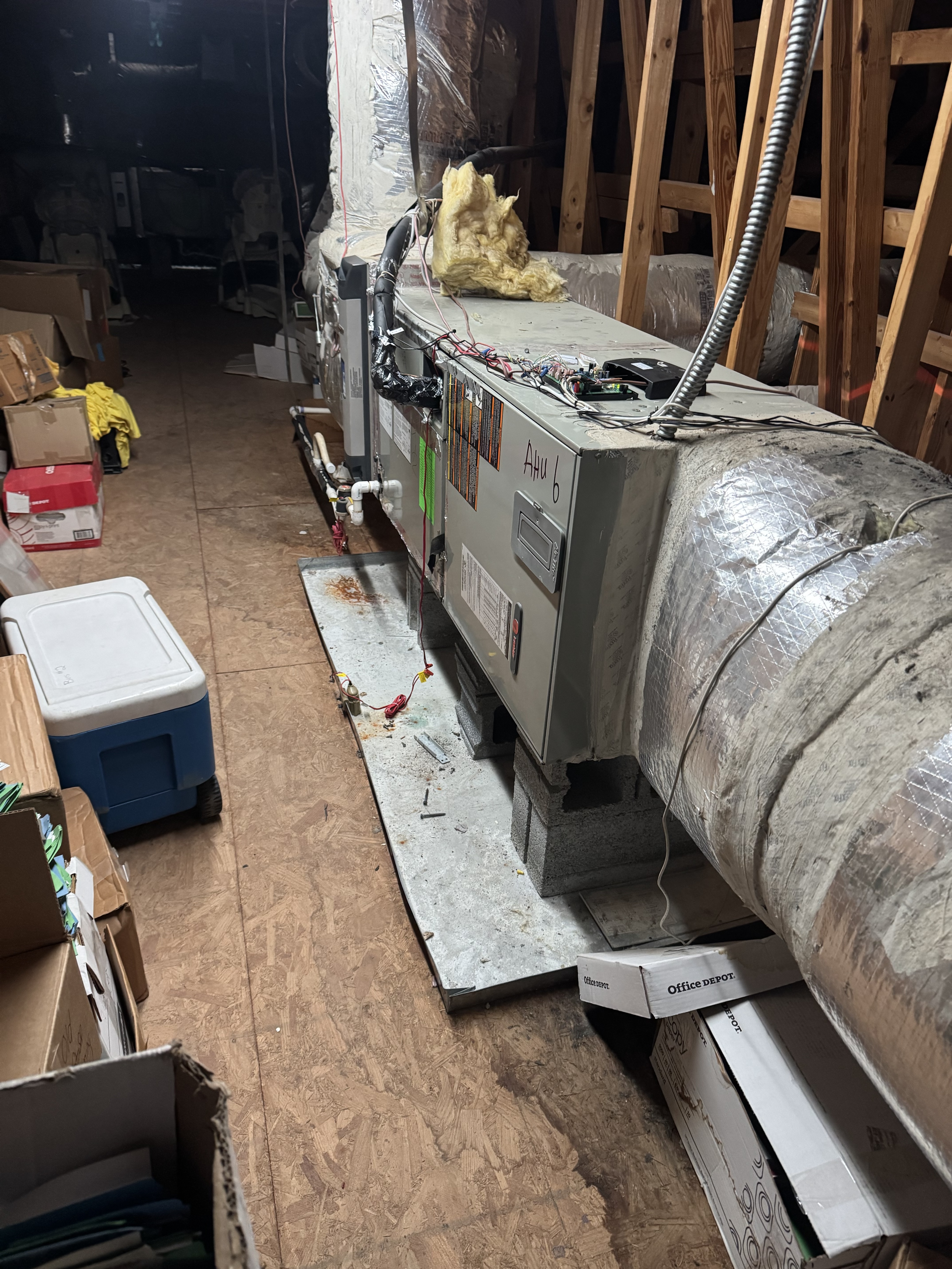
A commercial customer needed a quote to replace six rooftop units and air handling units. Before any quote went out, the customer asked for the equipment to be checked on site so the proposal would reflect actual conditions, not assumptions.
Our technician inspected all six units. Two of the units were fairly new and did not need to be replaced. That finding changed the project from a full six-unit changeout to a four-unit replacement scope.
The corrected scope was clear: four rooftop units and air handling units needed replacement. Two did not. By documenting that difference before pricing, the customer avoided paying for equipment that still had useful life left.
The equipment under review for replacement included Trane five-ton, 14 Seasonal Energy Efficiency Ratio rooftop and air handling units. The quote remained under review with the facility team at the time of this update.
Customer result: A more accurate replacement scope based on real equipment condition, with two units kept in service instead of replaced unnecessarily.
Once the inventory was confirmed at four units, the next step was pricing that matched the real work. The team coordinated with the client to arrive at a reasonable quote amount by fine-tuning labor hours and the materials needed to complete the changeout.
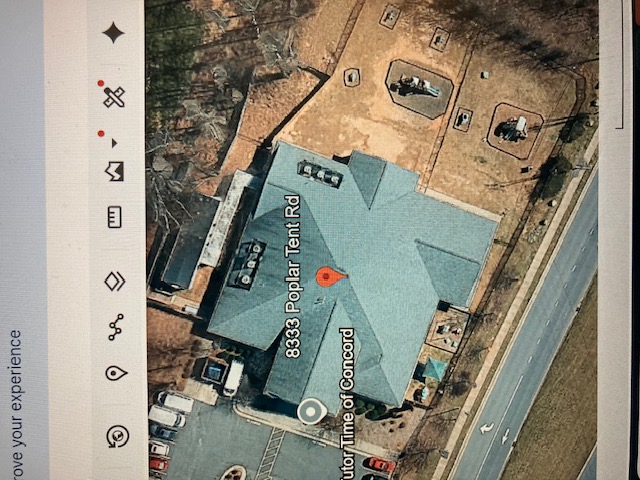
Roof access and staging matter on commercial replacements. The aerial documentation for this site showed where the units sit on the building and the logistics of getting replacement equipment onto the roof. Those details affect crane planning, labor time, and how the work is sequenced around the facility.
Attic air handling equipment added another planning layer. Access paths, clearances, and handling requirements need to be reflected in labor and materials so the quote stays realistic for both the field crew and the facility budget.
At the time of this write-up, the quote was still under review. The focus remained on working closely with the facility manager so the proposal stayed aligned with site conditions and the corrected four-unit scope.
Not every recent win is a capital project. This month also included reactive service calls across Tennessee, Ohio, and Virginia locations. Facility managers at those sites shared that they were very pleased and extremely satisfied with the response.
The feedback centered on how quickly the team got the work done. For multi-site operators, reactive calls are judged by arrival time, clear communication, and closing the issue without a long wait for a second visit.
That kind of day-to-day reliability is why facility teams keep calling the same provider when something fails during operating hours. Fast dispatch on reactive work protects comfort, occupancy, and the rest of the maintenance calendar.
What stood out: Quick response on reactive calls across Tennessee, Ohio, and Virginia, with facility managers reporting strong satisfaction with the work completed.
Request service and our team will respond with the same field-first approach.