After a hard rain, you should not be mopping near the sales floor in Jacksonville or watching a slow leak darken ceiling tiles in Charlotte. Most of that trouble starts with water that had nowhere to go on the roof, in the gutters, or along the walk outside. This checklist helps your team move rain away from the building before it finds a path inside.
Garrett Mechanical serves commercial sites across Alabama, Florida, Georgia, Kentucky, Maryland, Mississippi, North Carolina, South Carolina, Tennessee, Virginia, and West Virginia. Summers bring sudden storms and long humid stretches. When several inches fall in an hour, the weakest spot is often the place where leaves, trash, or silt narrowed the way for water to leave. You do not need special training to catch most of those problems early. You need a routine walkthrough and a willingness to call for help when something is out of reach or unsafe.
Start Where Water Is Supposed to Leave the Roof
On many commercial buildings, water exits through gutters and downspouts, through roof drains on low slope roofs, or through a mix of both. Your first job is to know which system you have and where the outlets are. Walk the roof only if your site rules and safety program allow it, with proper fall protection. If roof access is limited, use binoculars from the ground and note anything obvious, then schedule a closer look through your facility inspection program or a qualified vendor.
Look for debris on the roof surface
Leaves, plastic bags, and loose gravel often slide toward drains and block the opening. After windy weather, check low spots where material collects. **Clearing that debris is one of the highest return tasks you can do** because it costs little beyond labor and prevents hundreds of gallons from pooling where you do not want them.
Check strainers and drain bowls
If your building has roof drains, the strainer basket is there to catch trash before it enters the pipe. When the basket is full, water backs up. That backup adds weight on the roof membrane and can push water toward seams, skylights, or parapet walls. Note any bent or missing strainers so they can be repaired.
Follow Water Down the Wall and Out to the Ground
Downspouts should move roof water into a leader that ties into underground piping, a splash block, or a paved swale that carries flow toward the street or a detention area. Walk the perimeter during or right after rain if you can do so safely. You will see gutters overflowing, leaks at joints, or downspouts that dump against the foundation instead of away from it.
- Gutters and seams: Look for sagging, separation, or rust streaks that show chronic overflow.
- Downspout shoes and elbows: Make sure they are attached and pointed so water lands several feet from the wall.
- Ground level grates: Parking lot and sidewalk drains often fill with silt and cigarette butts. When they are slow, you get ponding at entries where customers and staff step through standing water.
Interior floor drains near loading docks and mechanical rooms matter too. If those lines are slow, a roof event can add stress to a system that already struggles. For recurring slow drains inside, drain and fixture service can clear the line and confirm whether the problem is local grease and paper or something deeper in the building main.
Ground Slope and Landscaping
Soil settles over time. Mulch builds up against brick. New sidewalks change how sheet flow moves across the property. A strip of land that used to tilt away from the building can end up sending water toward the wall. Walk the line after a storm and look for mud lines on siding, eroded spots along the foundation, or mulch washed against the base of the wall. Those are clues that grading or drainage needs attention from your grounds vendor or civil contractor.
This ties directly to long term building care. Water that sits against the wall encourages paint failure, door threshold leaks, and musty smells in lower levels. The ideas in our guide on water damage prevention for facility managers pair well with exterior checks because both are about catching moisture before it becomes a large insurance claim.
When to Bring in a Partner
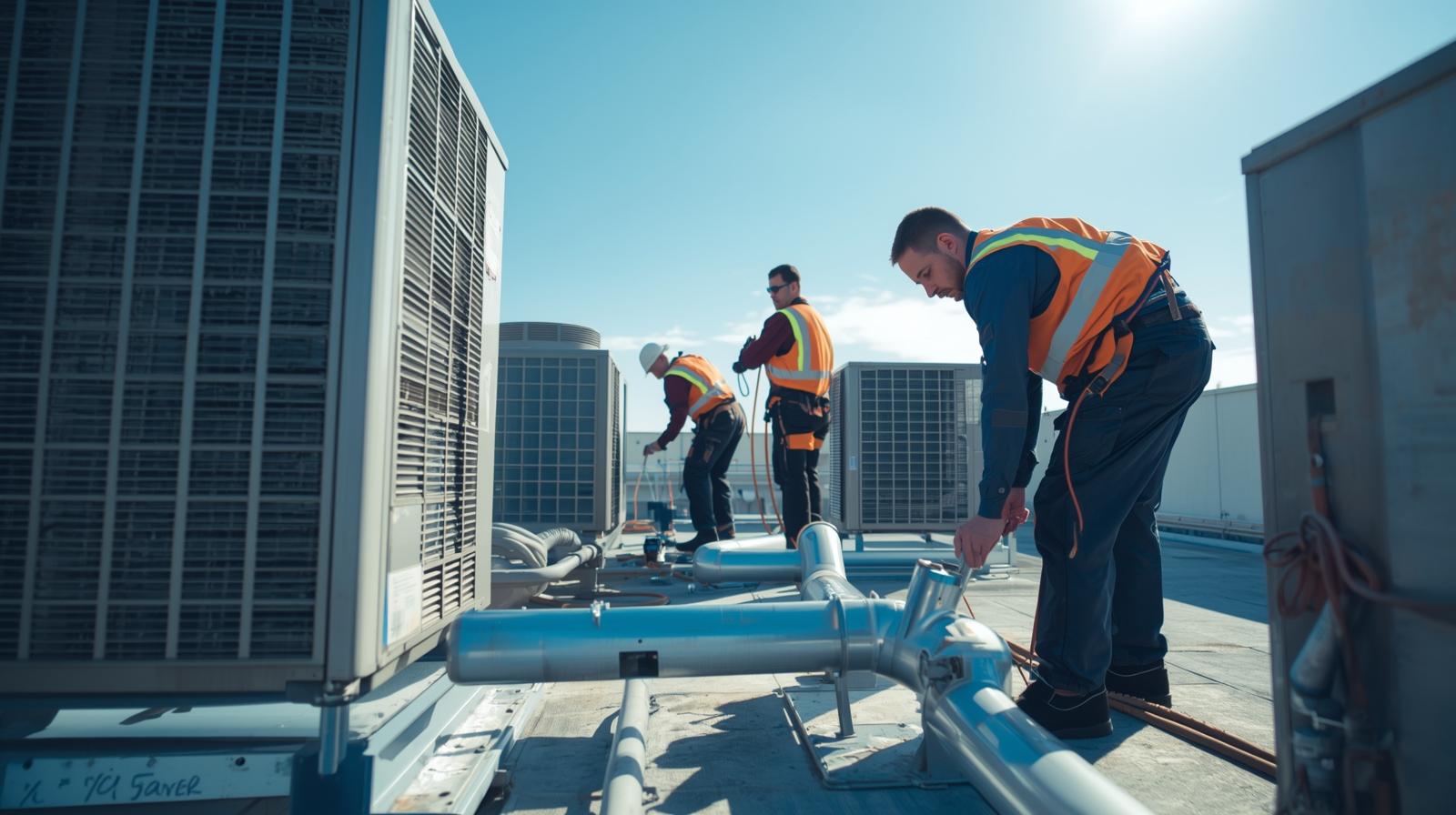
Some tasks belong to trained technicians: opening large roof cleanouts, professional cleaning of building drain mains, or working near energized equipment on the roof next to packaged cooling units. If you see ponding water that does not drain within a day, repeated ceiling stains, or new cracks along parapet coping, document photos and dates and request service. Early response usually costs far less than replacing wet insulation, grid ceiling, or stock.
A solid preventive maintenance rhythm puts roof and storm checks on the calendar twice a year at minimum, more often if you sit under heavy tree cover. Pair that with a quick look after every named storm or local flood warning. Teams in coastal Florida, low lying South Carolina, and river adjacent parts of Tennessee know how fast conditions change.
Garrett Mechanical is ready to support commercial facilities with coordinated mechanical, plumbing, and light electrical work when storm prep turns into repairs. Contact us to schedule service or to align your exterior checks with the rest of your building maintenance plan.