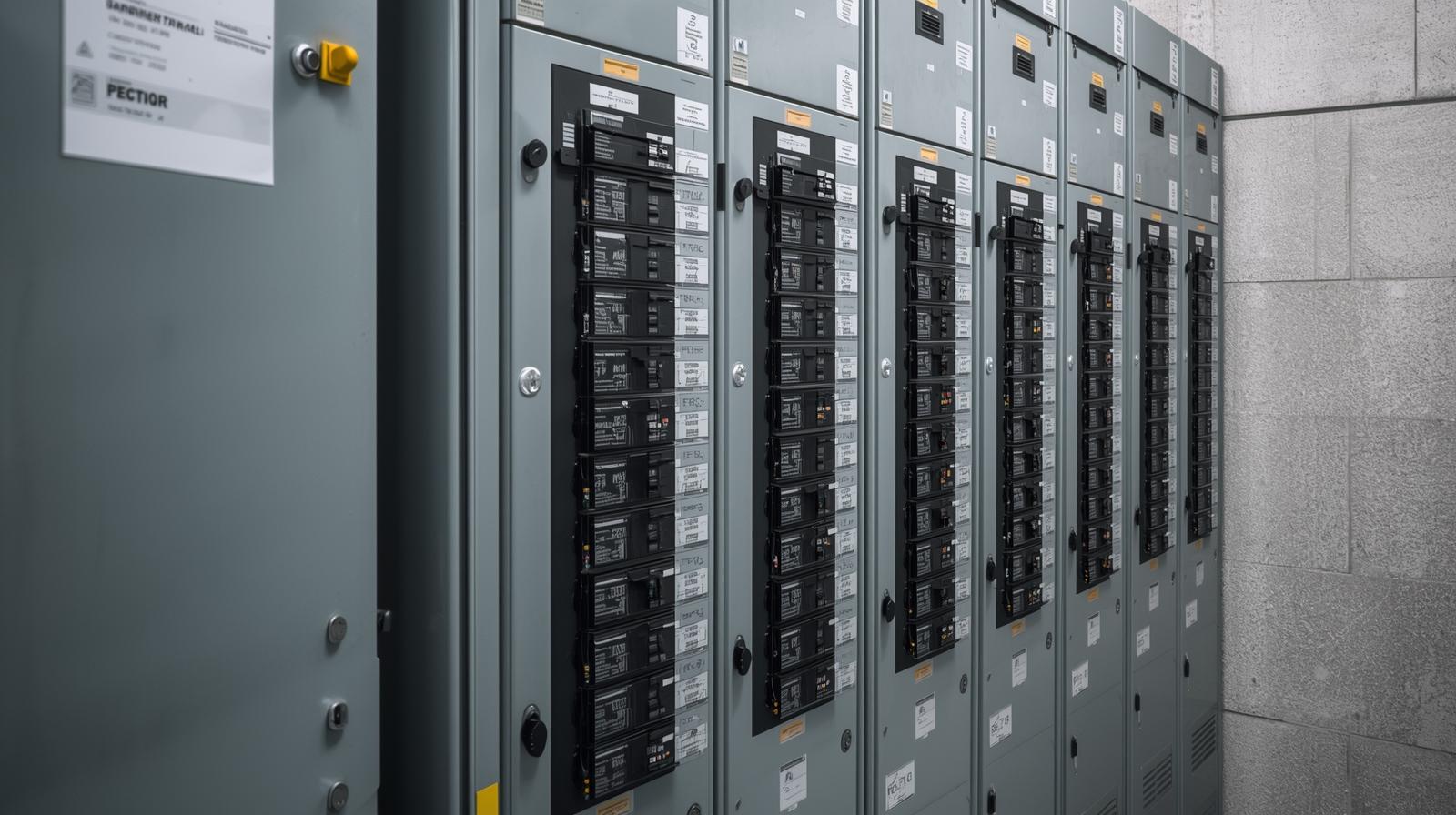
Accurate labels are a control document for automatic transfer switches and manual load-shed plans. They matter as much as conductor size after walls close.
Garrett Mechanical aligns labeling with commercial electrical closeout and storm documentation in shoreline panel stride guides.
Remodel drift on emergency branches
Kitchen expansions, added RTUs, and tenant finish-outs often land on panels that also feed standby legs. Breakers moved during construction may keep old room names on the directory card.
A transfer switch matrix that lists Breaker 14 as north wing RTU when Breaker 14 now feeds a server room creates shed errors under stress.
Tenant improvement permits should trigger an electrical label audit before occupancy certificate.
Directory cards versus engraved legends
Paper directory inserts fade and fall out. Engraved legends cost more but survive humidity in coastal electrical rooms. The right medium depends on who updates labels after each project.
We recommend a single owner for label updates tied to permit sign-off, not only to punch-list paint.
QR codes on panel doors can link to digital directories when paper cards are repeatedly lost.
Color and step coding for multi-step transfers
Step one critical, step two HVAC, and step three optional branches benefit from consistent color or number tags at the breaker handle and on the one-line sketch.
Matching tags on the generator controller screen reduce training time for relief facilities staff.
International facilities staff may read legends differently; pictographs for critical life-safety loads help.
Arc-flash and legible text
Labels must remain readable from the working distance maintenance staff actually use. Tiny handwritten pencil marks fail during flashlight-only outage walks.
Photo the entire panel face after updates and store the image with facility closeout documentation.
Thermally printed labels can fade in unconditioned rooms; material choice is part of the specification.
Landlord and multi-tenant boundaries
Shared panels may feed tenants on different standby contracts. Labels should show which breakers belong to which meter when legally allowed.
Vendor-management partners need the same field names at every site in their portfolio.
Standby contracts should attach the same photo set the electrician stored at closeout.
Verification during transfer tests
Each exercise should confirm labeled loads actually pick up on the named breaker. Mismatches belong on the correction list before storm season.
Pair with generator sizing notes when a new RTU label reveals load growth since the original standby install.
Failed label verification during test becomes a corrective action with a due date, not a verbal note.
Schedule label audits
Bring as-built electrical sheets and the last remodel permit list. Note any unlabeled taps on the standby bus.
Contact (904) 822-3339 or contact for panel documentation support.
Night-shift staff should walk the panel once per quarter to catch drift before an outage.
Documentation that survives staff turnover
Southeast coastal sites share storm calendars that compress both utility make-ready and generator exercise windows into the same weeks. Treating electrical readiness as a single plan across sizing, transfer timing, and fuel reduces conflicting advice from separate vendors.
Garrett Mechanical documents storm electrical work so facility leads can compare year-over-year test values instead of relying on memory after staff turnover. Written closeout belongs beside permits, insurance packets, and landlord reporting folders.
Browse the knowledge base, coverage map, and facilities vendor management resources when planning multi-site consistency. Call (904) 822-3339 or submit a service request when measured values—not assumptions—should drive the next decision.
Measured field notes from prior visits should travel with the property when ownership changes. Screenshots of controller settings and labeled panel photos reduce repeat discovery fees on the next call.
Measured field notes from prior visits should travel with the property when ownership changes. Screenshots of controller settings and labeled panel photos reduce repeat discovery fees on the next call.
Measured field notes from prior visits should travel with the property when ownership changes. Screenshots of controller settings and labeled panel photos reduce repeat discovery fees on the next call.
Measured field notes from prior visits should travel with the property when ownership changes. Screenshots of controller settings and labeled panel photos reduce repeat discovery fees on the next call.
Measured field notes from prior visits should travel with the property when ownership changes. Screenshots of controller settings and labeled panel photos reduce repeat discovery fees on the next call.
Disclaimer: This article is for general informational purposes only. It is not professional advice, a quote, or a service agreement. Conditions at your home or property may differ; contact a qualified professional for an on-site evaluation before making repair, safety, or spending decisions.